
News
August 4, 2026
By Gabriela Leme
My First NUTRITION 2026
Share



By Roxana Ehsani, MS, RD, CSSD, LDN
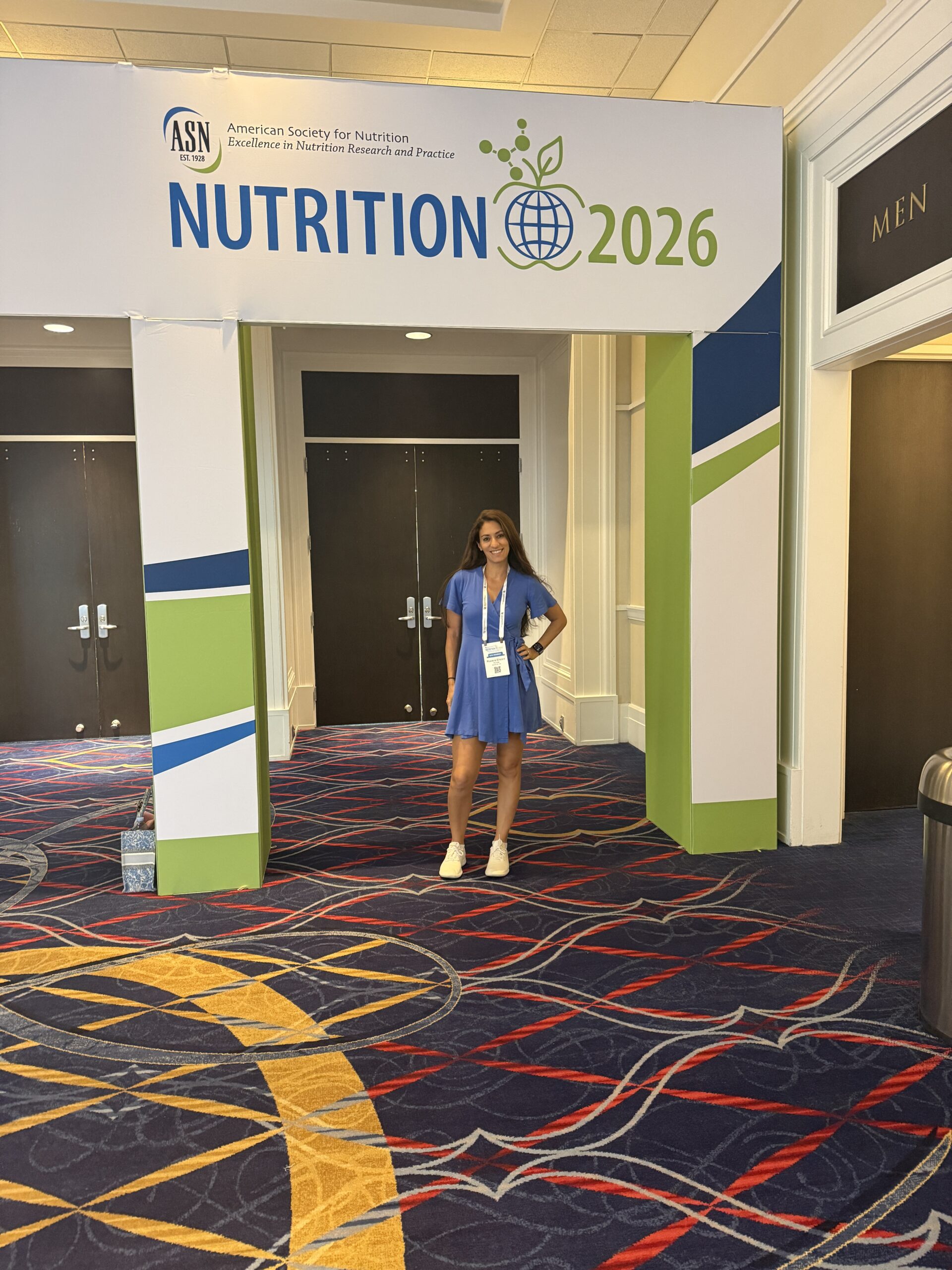
I had the pleasure of attending NUTRITION 2026 – American Society for Nutrition’s annual conference – as an ambassador to Nuritas, and as a first time attendee. I’ve been to plenty of conferences through my decade-long career as a registered dietitian nutritionist, but this one felt different. Unlike a lot of the events I’ve attended in past years – built around dietitians, media, new food products, farm tours, or brand company HQs – this one was for researchers, scientists, academics, other health care professionals, and students, and it focused on presenting the latest science. Honestly, it felt like a flashback to my early days as a dietetics student, back to basics, back to the research.
If I had to boil the conference down to three big themes, it would be this: GLP-1s, protein (protein, protein, and more protein), and AI. None of that should have surprised me, given that I’m also a contributing writer for EatingWell and spend a lot of time talking with the media about exactly these topics – but seeing how dominant they were across the entire schedule was still surprising to me.
GLP-1 medications were everywhere on the agenda this year, which tracks – as one presenter mentioned about 12% of U.S. adults are taking a GLP-1, with another 6% having tried one. While everyone associates GLP-1s with weight loss, researchers were focusing on areas beyond weight loss such as how GLP-1s were leading to improvements in other chronic diseases like diabetes, cardiovascular disease, chronic kidney disease, and sleep apnea, with additional trials underway for IBS/IBD, PCOS, osteoarthritis, Alzheimer’s and Parkinson’s, and more.
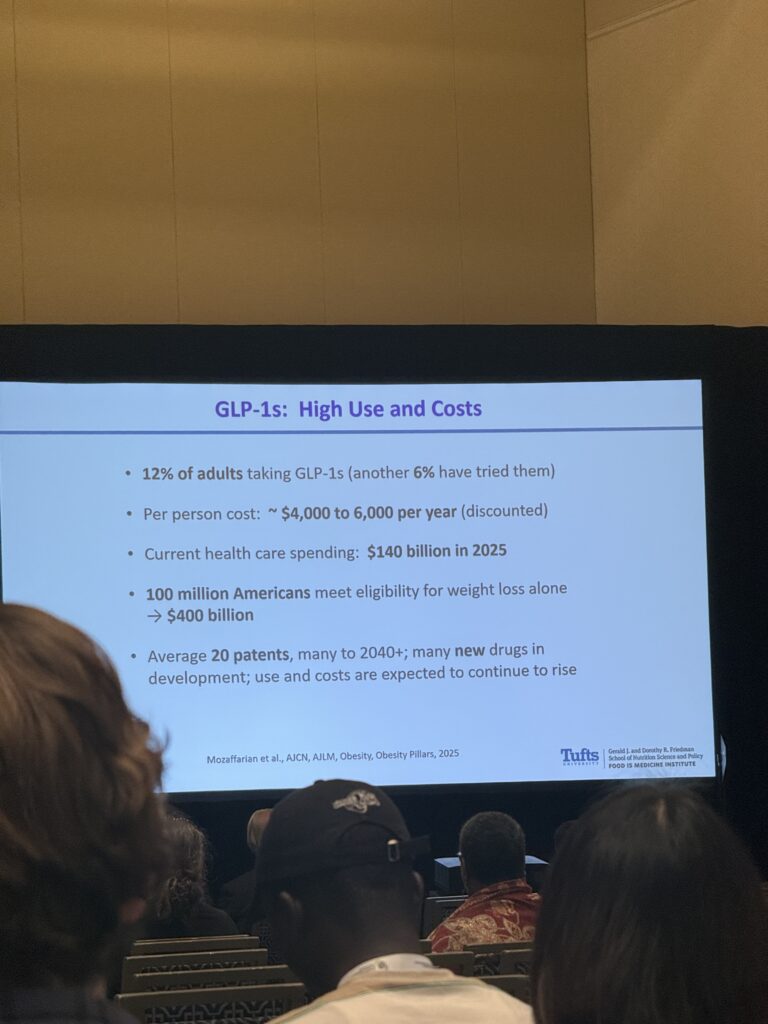
Another thing associated with GLP-1s: a high protein diet. But here’s the important caveat, another presenter said he wished more people on the drug knew: “a high protein diet is emphasized while people are on GLPs, but it does nothing without strength training.” Yet, most Americans aren’t hitting the recommended minimum of two days a week of strength training that covers all major muscle groups. (Are you?) TL;DR: If you’re on a GLP-1 for weight loss, you’re not just losing fat, you’re likely losing muscle too. And a high-protein diet alone won’t stop that. Without strength training at least twice a week, that muscle loss will happen regardless of how much protein you’re eating.
That’s why, as another presenter put it – worrisome nutrient gaps can develop while people are on these drugs and most people aren’t working with a registered dietitian for guidance. Not to mention, the many people who regain weight after coming off these drugs.
“GLP-1s have to be considered a tool alongside lifestyle change – not the tool for weight loss or improved health outcomes,” says one presenter. “And weight loss itself shouldn’t be the goal; it’s just one indicator of what’s happening in the body”.
And speaking of protein – it’s not just dominating in your local grocery store – there was a lot of discussion about how our national protein guidance has evolved from the original Dietary Reference Intakes established back in 1995 through to the 2025 Dietary Guidelines for Americans, which now point toward a higher protein range of 1.2–1.6 g/kg/day.
While presenters across sessions focused on protein – all voiced the same thing, there is evidence for more protein in the research which most Americans actually are already doing but here’s what most people aren’t doing: eating more protein from plants such as whole grains, beans, lentils, peas, and less from refined grains and processed foods.
Some of the most energizing conversations at the conference weren’t about a single nutrient or ingredient at all – they were about AI. Researchers are using it to improve dietary assessment and estimate nutritional content and calorie intake.
But there was also real caution around its limitations. One example that stuck with me: Gemini, Google’s AI platform, misjudged nutritional data by anywhere from 60-100%, while ChatGPT and Claude showed smaller, but still meaningful error rates in the 30-40% range. Another good reminder that we can’t rely on AI for everything – at least not yet.
A few other topics that were spoken about at the conference: food as medicine, ultra-processed foods, and the microbiome. And one topic that stuck with me was biofortification, which is the fortifying staple crops with nutrients like vitamin A, zinc, and iron so as one presenter put it so eloquently: “the plate looks the same, but the nutrition is transformed.” Researchers are using this approach to improve nutrition for populations at risk of malnutrition and overall helping to improve human health worldwide – which I found fascinating to learn about.
Beyond sessions, I also had the pleasure of connecting with fellow dietitians, researchers, PhDs, and other health and nutrition professionals, where I had the opportunity to shed light on Nuritas – which really sits at the intersection of several of these major trends: a natural fit for the emerging interest in high-protein foods and diets, an early mover in applying AI, a potential ally for people navigating GLP-1s who need to get more nutrition out of less food, and much like biofortification, a great example of food as medicine in action, transforming a familiar plant source (fava beans) into a functional, targeted muscle health solution without changing what’s on the plate.
 Previous
